Training
Beginner Guide to Gymnastic Rings Training
Start calisthenics rings training with simple progressions, safe technique, and a practical beginner gymnastic rings workout structure.
By RingsXPublished 6 min read
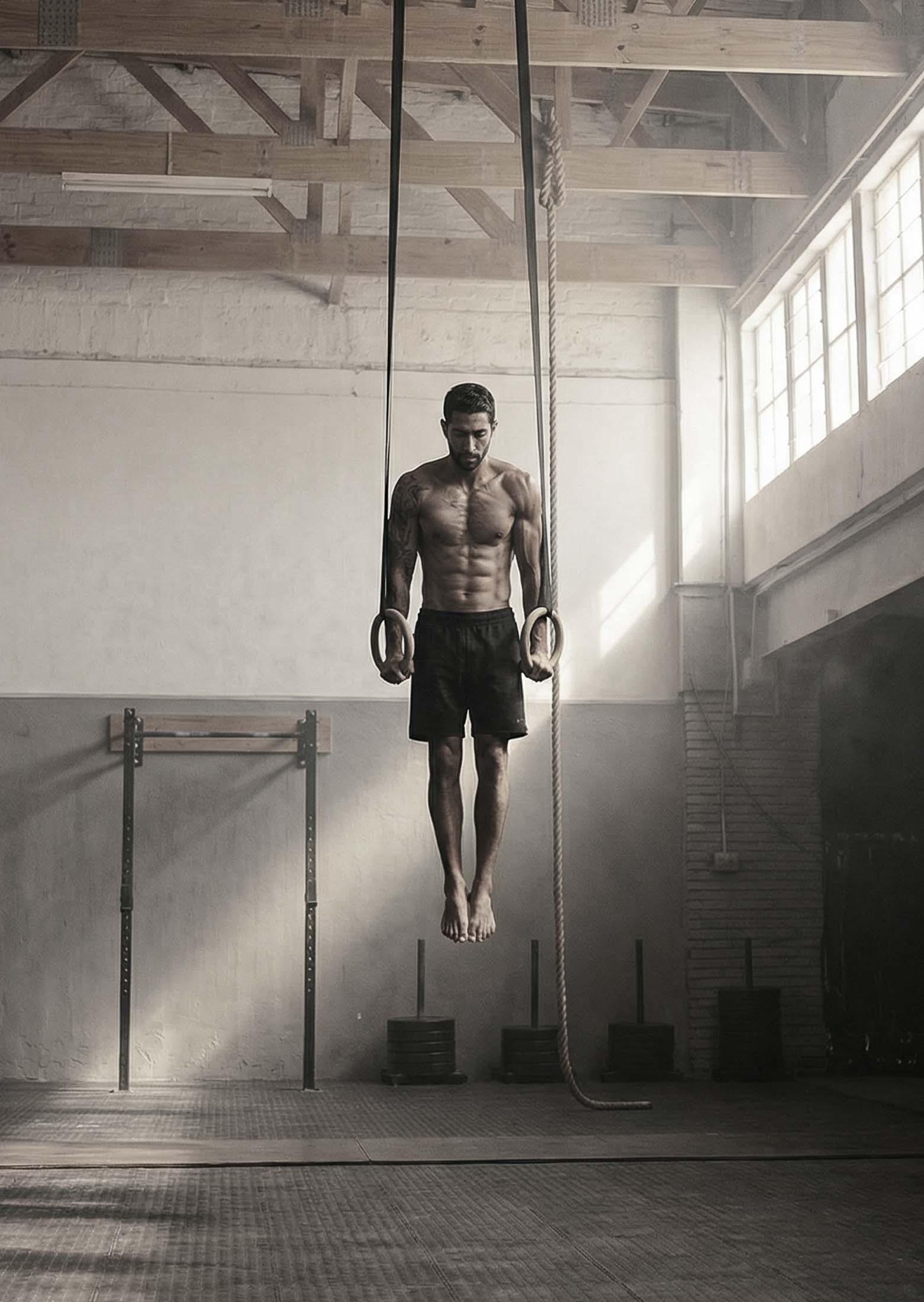
Gymnastic rings can look intimidating, but beginners do not need advanced skills to start.
The first goal is not a muscle-up, front lever, or deep ring dip. It is learning how to control the rings through basic pushing, pulling, support, and core exercises.
This guide gives you a simple starting structure so you can train consistently without jumping ahead. For a full library of scalable movements, explore the gymnastic ring exercises in RingsX.
Quick answer
Beginners should start with ring rows, assisted ring push-ups, support holds, and basic core work. Adjust the ring height and body angle to make each exercise manageable.
Train two or three times per week, prioritize controlled repetitions, and progress only when your position remains stable.
Why rings are useful for beginners
Rings can be adjusted to almost any strength level.
Move your feet closer to the anchor point and an exercise becomes harder. Stand more upright and it becomes easier. This makes the rings useful for gradual progression without changing equipment.
Basic ring training develops:
- Pulling strength
- Pushing strength
- Shoulder stability
- Grip strength
- Core tension
- Body awareness
The instability also gives immediate feedback. If your shoulders, trunk, or hips lose position, the rings begin to move.
That feedback is useful, but only when you keep the exercises simple enough to control.
Common beginner problems
The rings shake too much
Some shaking is normal when you are new. Excessive movement usually means the exercise is too difficult or the set has continued too long.
Make the movement easier and focus on slower repetitions.
Every exercise feels unstable
Beginners often start with dips, pull-ups, or advanced push-ups before learning basic ring control.
Begin with exercises where your feet stay on the floor. This lets you build stability without supporting your full bodyweight.
Progress feels difficult to measure
Ring exercises have many adjustable variables: ring height, foot position, body angle, range of motion, tempo, and assistance.
Change only one variable at a time. Otherwise, it becomes difficult to know whether you are actually improving.
Your first ring training progression
Use this order to build a balanced foundation.
1. Ring rows
Set the rings around chest height. Hold them with straight arms and walk your feet forward until your body leans back.
Pull the rings toward your ribs while keeping your body straight.
Start more upright. Gradually move your feet forward as you become stronger.
2. Assisted ring push-ups
Set the rings between waist and chest height.
Keep your body in a straight line and lower your chest between the rings. Press back up without letting the rings drift far apart.
Higher rings make the exercise easier.
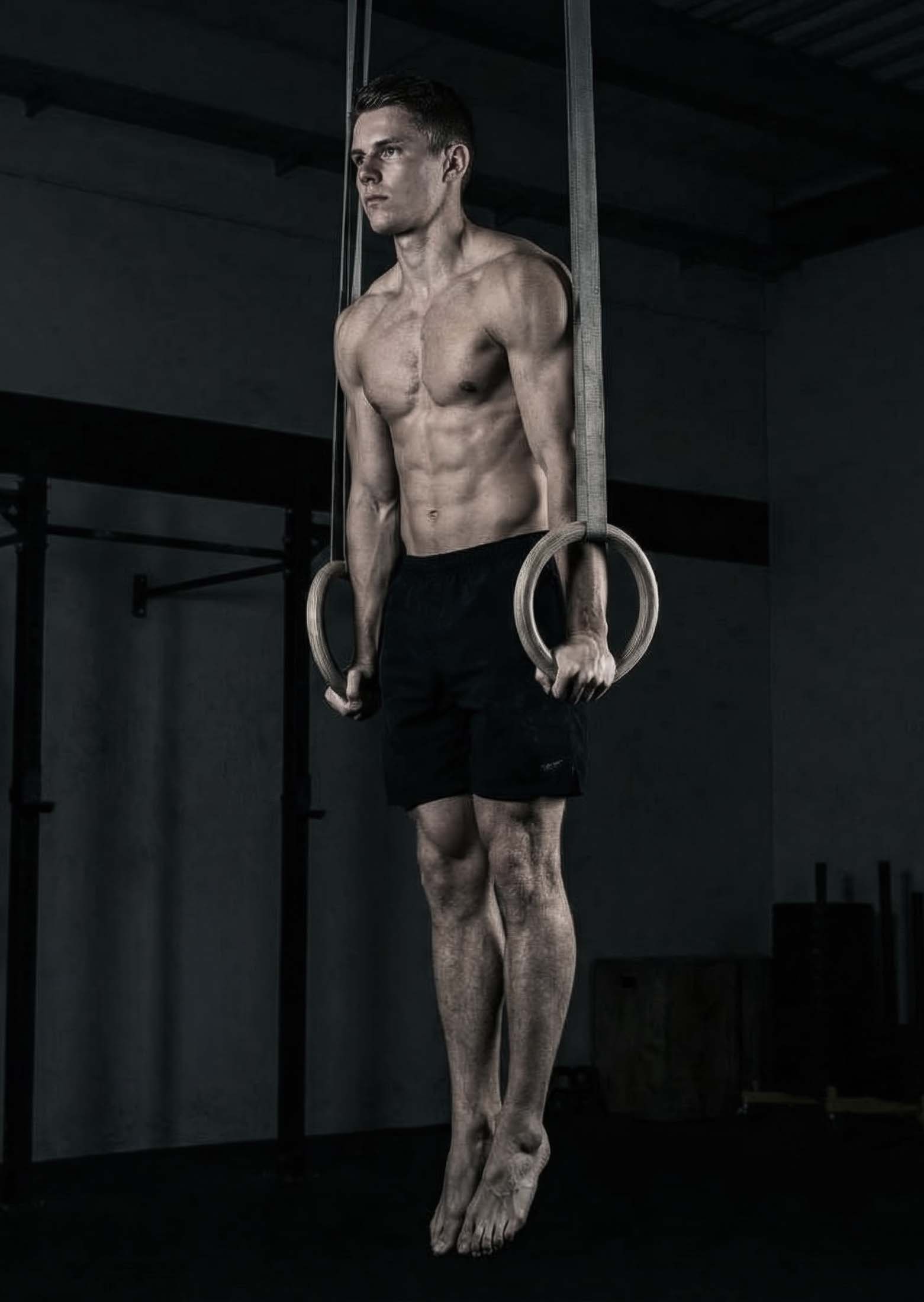
3. Feet-assisted support holds
Set the rings around hip height and keep your toes lightly on the floor.
Press down through straight arms. Keep the rings close to your sides and your shoulders away from your ears.
Use your feet only as much as necessary. For deeper coaching on this position, read Ring Support Holds: Build the Foundation First.
4. Ring fallouts
Start with the rings around waist height. Lean forward slightly and extend your arms while keeping your ribs and pelvis controlled.
Pull the rings back underneath your shoulders.
Keep the range short until you can resist arching your lower back.
5. Assisted squats
Hold the rings lightly and sit into a controlled squat.
Use the rings for balance rather than pulling yourself up. This variation can help you practice depth and lower-body control.
Technique cues that apply to most ring exercises
Good beginner technique is simple:
- Keep the rings close to the body when possible.
- Move slowly enough to control the equipment.
- Keep your wrists in a comfortable, neutral position.
- Brace your trunk instead of letting the ribs flare.
- Finish each repetition before starting the next one.
- Stop the set when your body position changes noticeably.
Do not try to eliminate every small movement. The goal is controlled movement, not perfectly motionless rings.
Common mistakes and fixes
Mistake: Starting with advanced skills
Why: Advanced ring exercises look exciting and feel like the main goal.
Fix: Build rows, push-ups, support holds, and core control first. These exercises create the strength used in harder skills.
Mistake: Training every set to failure
Why: Beginners often use fatigue as proof that the workout was effective.
Fix: Stop with one or two clean repetitions available. Technique usually breaks before the target muscles are fully exhausted.
Mistake: Progressing too many variables
Why: Lower rings, greater range, slower tempo, and more repetitions are added at the same time.
Fix: Change one variable and keep the others consistent.
Mistake: Ignoring shoulder position
Why: Attention stays on completing the repetition.
Fix: Keep the shoulders active and controlled. Avoid collapsing into the bottom of push-ups or support holds.
A simple beginner rings workout
Train this session two or three times per week with at least one recovery day between sessions.
- Ring rows: 3 sets of 6–10 reps
- Assisted ring push-ups: 3 sets of 6–10 reps
- Feet-assisted support holds: 3 sets of 10–20 seconds
- Ring fallouts: 2–3 sets of 5–8 reps
- Assisted squats: 3 sets of 8–12 reps
Rest around 60 to 120 seconds between sets. Take longer when you need it to maintain clean technique.
Before the workout, warm up your wrists, shoulders, elbows, and upper back with gentle movements and easy practice repetitions.
What to train next
Once the beginner exercises feel stable, you can work toward:
- More horizontal ring rows
- Lower ring push-ups
- Unassisted support holds
- Ring dip negatives
- Assisted pull-ups
- Tuck holds
- False-grip practice
Progress when you can repeat the current variation without losing body tension or ring control. When you are ready for structured sessions, follow gymnastic rings workout programs and ring skill progressions inside RingsX.
Frequently asked questions
How often should beginners train on rings?
Two or three full-body sessions per week are enough for most beginners. Your ideal frequency depends on recovery, other training, and how demanding the exercises are.
Do I need to be strong before starting?
No. Ring height and body angle can make basic exercises accessible. Begin with your feet on the floor and choose variations you can control.
Which ring exercise should I learn first?
Ring rows and assisted ring push-ups are strong starting points. They teach basic pulling, pushing, and ring control without requiring you to support your full bodyweight.
When should I start training ring dips?
Start preparing for dips after you can hold a stable support position with straight arms. Assisted dips and slow negatives should come before full repetitions.
How do I know when to progress?
Progress when you can complete every set with consistent range, tempo, and body position. Increase difficulty slightly rather than making a large jump.
Keep your training structured
The RingsX app can guide your exercise selection, track completed progressions, and help you understand what to train next without skipping essential foundations.
RINGSX
Start now in the RingsX App
Turn what you just learned into structured calisthenics rings training — progressions, workouts, and clear next steps.
Start nowRelated articles
- Ring Dips: Progressions, Form, and ProgrammingBuild stronger ring dips with clear progressions, technique cues, common mistake fixes, and programming for calisthenics rings pushing strength.
- Ring Support Holds: Build the Foundation FirstLearn why a stable gymnastic rings support hold is the foundation for dips, muscle-ups, and ring skills — plus clear standards and weekly practice structure.