Training
Ring Dips: Progressions, Form, and Programming
Build stronger ring dips with clear progressions, technique cues, common mistake fixes, and programming for calisthenics rings pushing strength.
By RingsXPublished 10 min read
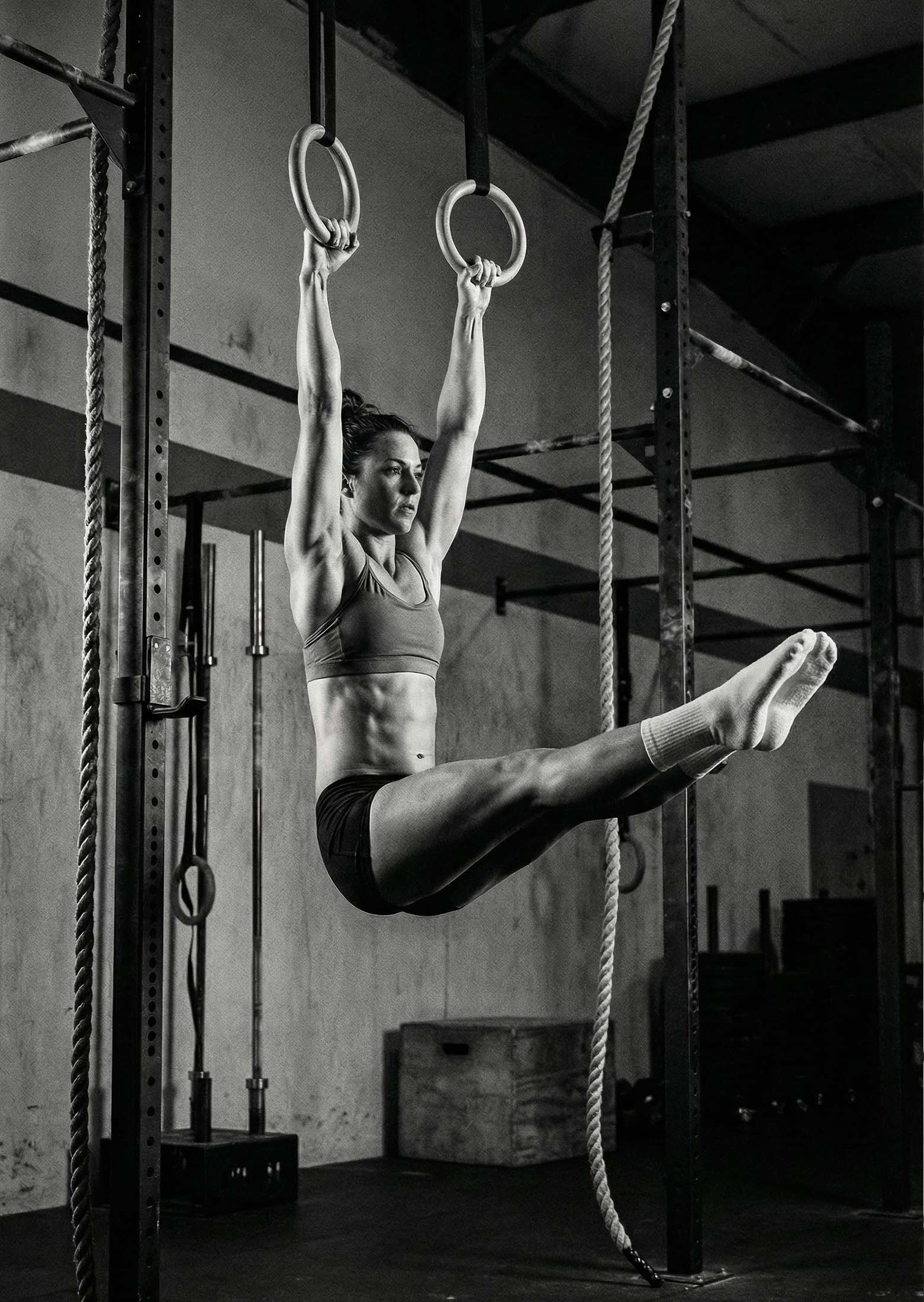
Ring dips build serious upper-body strength, but strength alone is not enough.
Unlike parallel bars, gymnastic rings move in every direction. Your shoulders, elbows, wrists, chest, triceps, and core must work together to control that instability. A clean ring dip is therefore both a pushing exercise and a full-body stability skill.
This guide is for athletes who can perform basic pushing work but feel shaky, weak, or uncomfortable when they attempt dips on rings. You will learn how to build the movement step by step, what good technique looks like, and how to program ring dips without rushing the process. If you are still building basics, start with the beginner guide to gymnastic rings training and support holds.
Quick answer
Ring dips are a vertical pushing exercise performed on freely moving rings. They primarily train the chest, triceps, front deltoids, shoulder stabilizers, and core.
Before training full repetitions, build a stable top support, controlled dip depth, and consistent ring position. Progress based on movement quality rather than chasing reps while the rings shake or drift.
Why ring dips matter
Ring dips develop pushing strength that transfers well to harder ring skills.
The main movement comes from shoulder extension and elbow flexion during the descent, followed by forceful elbow extension and shoulder flexion as you press back to support. Because the rings are unstable, the rotator cuff and surrounding shoulder muscles must continuously adjust to keep the joints organized.
That instability changes the exercise.
On fixed bars, the equipment provides a stable base. On rings, you must create that stability yourself. This teaches you to produce force while controlling unwanted movement.
Well-developed ring dips can support progress toward:
- Strict ring muscle-ups
- Deep ring push-ups
- Bulgarian ring dips
- Ring turnout strength
- More advanced straight-arm and bent-arm combinations
They also expose weaknesses quickly. If your support position is poor, your dip will feel unstable. If your core loses tension, your legs will swing. If your shoulders lack control, the rings may drift outward or forward.
The movement gives honest feedback.
Why beginners get stuck
Most failed ring dips are not caused by one isolated weakness. Several small limitations usually combine.
The support position is not stable
Many athletes begin lowering before they can hold the top position confidently. The rings shake, the shoulders rise toward the ears, and the elbows remain slightly bent.
Without a strong support, every repetition begins from a compromised position.
The descent is too fast
Dropping into the bottom removes control and places more stress on the shoulders. It also makes the press harder because you must reverse the movement from a loose position.
A slower descent gives you time to keep the rings close and maintain tension.
The rings drift away from the body
As the rings move outward, the exercise becomes less stable and often less comfortable. This usually happens when the athlete lacks support strength, loses upper-back tension, or tries to reach too much depth.
Depth exceeds current control
A deep dip can be useful, but only when the shoulders remain organized. Forcing extra range while the shoulders roll forward is not productive progression.
Earn depth gradually.
The body moves as separate pieces
If the ribs flare, hips drift forward, or legs swing, force leaks through the system. Ring dips feel strongest when the torso, pelvis, and legs move as one controlled unit.
A step-by-step ring dip progression
Move forward only when the current step looks consistent. One clean progression is more valuable than several unstable full reps.
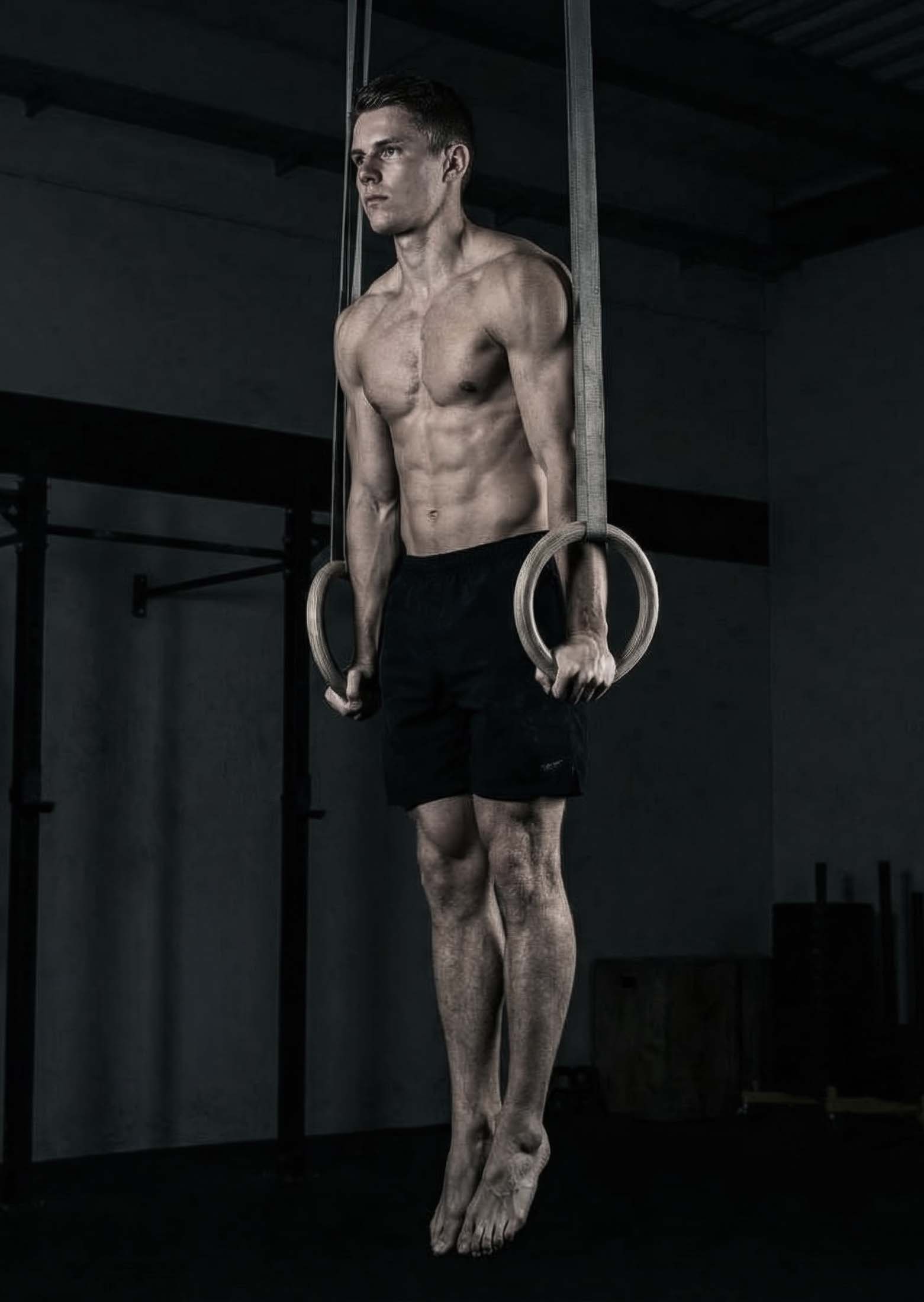
1. Build a stable ring support hold
Set the rings around hip height and use your feet for assistance if needed.
Press down through straight arms and lift your body into the top position. Keep the rings close to your sides, shoulders away from your ears, ribs controlled, and legs together.
Aim to hold the position without visible shaking or constant correction.
A useful quality standard is several controlled holds of 15 to 30 seconds. The exact duration matters less than the position.
2. Use foot-assisted ring dips
Lower the rings so your feet can remain on the floor in front of you.
Use your legs only as much as necessary. Keep most of the effort in the upper body while practicing the full movement pattern.
This variation lets you control depth, ring position, and tempo without being limited by full bodyweight.
3. Practice slow ring dip negatives
Start in a stable top support and lower yourself over three to five seconds.
Keep the rings close to the torso. Stop the repetition before your shoulders lose position, then place your feet down and reset.
Negatives build strength through the lowering phase and teach you where your control starts to break.
4. Add partial-range ring dips
Perform unassisted repetitions through a range you can control.
The bottom position may initially be above a 90-degree elbow angle. That is acceptable. Maintain clean ring tracking and gradually increase the depth over time.
Do not turn partial range into rushed bouncing.
5. Perform full ring dips
Lower until the shoulders pass slightly below the elbows, provided the position remains comfortable and controlled.
Pause briefly rather than collapsing at the bottom. Press down through the rings and return to a stable support with locked elbows.
One strong repetition is a valid starting point.
6. Refine the top position
As your strength improves, work toward turning the rings slightly outward at the top.
The turnout should come from controlled external rotation, not from forcing the wrists. Keep the elbows straight and shoulders stable.
A full aggressive turnout is not required for basic ring dips, but controlled turnout strength improves support quality.
Technique cues for cleaner reps
Good technique should feel tight, deliberate, and repeatable.
Use these cues:
- Start tall: Lock the elbows and press the shoulders away from the ears.
- Keep the rings close: Let them track beside the ribs instead of drifting wide.
- Brace the trunk: Keep the ribs stacked over the pelvis.
- Lower under control: Avoid dropping into the bottom.
- Use a slight forward lean: This allows the shoulders and elbows to move naturally.
- Keep the forearms organized: Avoid extreme wrist collapse or uncontrolled ring angles.
- Press the rings down: Think about moving your body upward rather than only straightening the elbows.
- Finish every rep: Return to a stable support before beginning the next descent.
Your exact ring angle may change slightly through the repetition. The goal is not to freeze the rings completely. The goal is to control their movement.
Common ring dip mistakes and fixes
Mistake: Starting with soft elbows
Why it happens: The athlete has not established a complete support position.
Fix: Pause at the top of every repetition. Lock the elbows, depress the shoulders, and stabilize the rings before descending.
Mistake: Letting the rings move too wide
Why it happens: The body loses tension or the athlete attempts more depth than they can control.
Fix: Keep the rings close to the ribs and reduce the range temporarily. Use assisted reps to reinforce the correct path.
Mistake: Shoulders rolling forward at the bottom
Why it happens: The athlete relaxes into the deepest position or lacks strength near the bottom.
Fix: Stop slightly higher, maintain upper-back tension, and add slow negatives within a controlled range.
Mistake: Flaring the elbows aggressively
Why it happens: The rings drift outward and the athlete searches for stability.
Fix: Allow the elbows to travel back at a natural angle while keeping the rings near the torso. Do not force the elbows tightly against the body.
Mistake: Swinging the legs
Why it happens: The core relaxes or the athlete uses momentum to escape the sticking point.
Fix: Squeeze the glutes, keep the legs together, and slow the repetition. Use an assisted variation if you cannot maintain body tension.
Mistake: Chasing depth too early
Why it happens: Depth is treated as the only measure of progress.
Fix: Judge the repetition by shoulder position, ring control, tempo, and the quality of the top support. Increase depth only when those remain consistent.
How to program ring dips
Train ring dips early in the session, after your general warm-up and any skill work that requires maximum freshness.
For most athletes, two or three sessions per week is enough exposure. Frequency depends on your training level, total pushing volume, recovery, and shoulder tolerance.
A beginner-focused session might include:
- Ring support holds: 3 sets of 15 to 30 seconds
- Foot-assisted dips: 3 to 4 sets of 5 to 8 reps
- Slow negatives: 2 to 3 sets of 2 to 4 reps
- Ring push-ups or another controlled pushing exercise: 2 to 4 sets
Athletes performing full ring dips can start with 3 to 5 sets of 2 to 6 clean repetitions. Stop the set when the rings begin drifting, depth changes, or the lockout becomes incomplete.
Rest long enough to maintain quality. For strength-focused work, this often means two to three minutes between demanding sets, but heavier athletes or advanced variations may need more.
Avoid taking every set to failure. Ring stability usually deteriorates before the target muscles are fully exhausted.
Leave one or two technically clean repetitions in reserve.
For a structured progression and a clearer view of what to train next, the RingsX app can help organize your ring dip work alongside related strength and skill development.
Skills to train before and alongside ring dips
Ring dips improve faster when the supporting qualities are trained directly.
Before full ring dips
Prioritize:
- Ring support holds
- Ring push-ups
- Parallel-bar dips
- Foot-assisted ring dips
- Scapular depression strength
- Basic hollow-body control
Alongside ring dips
Useful complementary exercises include:
- False-grip hangs
- Ring rows
- Pull-ups
- Pike push-ups
- External rotation work
- Controlled German hang preparation
Balanced pulling and pushing volume can help keep the shoulders strong across multiple positions.
After ring dips become consistent
You can progress toward:
- Ring dips with a stronger turnout
- Tempo ring dips
- Paused ring dips
- Weighted ring dips
- Bulgarian ring dips
- Strict ring muscle-up transitions
Add difficulty gradually. Extra instability is not automatically better.
Frequently asked questions
How many ring dips should I be able to do?
There is no universal target, but five to eight clean repetitions show a useful base of ring pushing strength. Quality matters more than the number. Stable rings, controlled depth, and complete lockout should remain consistent across the set.
Should ring dips go below 90 degrees?
They can, provided your shoulders remain stable and the position feels controlled. Do not force a deeper range if the shoulders roll forward, the rings drift outward, or discomfort appears. Build depth progressively.
Are ring dips harder than bar dips?
Yes, for most athletes. The moving rings demand more stabilization from the shoulders, arms, chest, and core. Someone with strong bar dips may still need time to adapt to ring support and ring control.
Can beginners train ring dips?
Beginners can train ring dip progressions, but full repetitions may not be appropriate immediately. Support holds, assisted dips, negatives, and partial-range reps provide a safer and more productive starting point.
Why do my rings shake during dips?
Shaking usually reflects limited support strength, fatigue, excessive range, or unfamiliarity with the instability. Reduce the difficulty and practice controlled holds and assisted repetitions. Some movement is normal, but it should decrease as control improves.
Do ring dips build the chest or triceps more?
They train both. A slightly greater forward lean tends to increase chest involvement, while a more upright position emphasizes the triceps. The exact balance also depends on ring path, depth, and individual structure.
Practice ring dips inside structured workout programs, or explore related gymnastic ring exercises and skill progressions in the RingsX app.
RINGSX
Start now in the RingsX App
Turn what you just learned into structured calisthenics rings training — progressions, workouts, and clear next steps.
Start nowRelated articles
- Beginner Guide to Gymnastic Rings TrainingStart calisthenics rings training with simple progressions, safe technique, and a practical beginner gymnastic rings workout structure.
- Ring Support Holds: Build the Foundation FirstLearn why a stable gymnastic rings support hold is the foundation for dips, muscle-ups, and ring skills — plus clear standards and weekly practice structure.